Deadlock after the vote? Political scientist sets out how New Zealand could still get a government
HouGarden New Zealand, 17 November — This is an opinion piece by Grant Duncan, a Research Associate at the Public Policy Institute, University of Auckland, Waipapa Taumata Rau. It was first published by The Conversation and is republished under a Creative Commons license. It is not a news report. The scenarios below are Duncan's hypotheticals, not events that have happened. The article does not give the election year, party seat numbers or poll figures, and none are supplied here.
Duncan starts from a question he calls common after an inconclusive election: what if New Zealanders do not get a new government for Christmas? He says the outcome depends on final results, due on November 27, and a possible recalculation of seat numbers.
He writes that an election is competitive, but the government-formation process that follows calls for dialogue and compromise to reach stable agreements that serve the country. In his words, cross-party collaboration is exactly what the proportional representation system was intended to encourage.
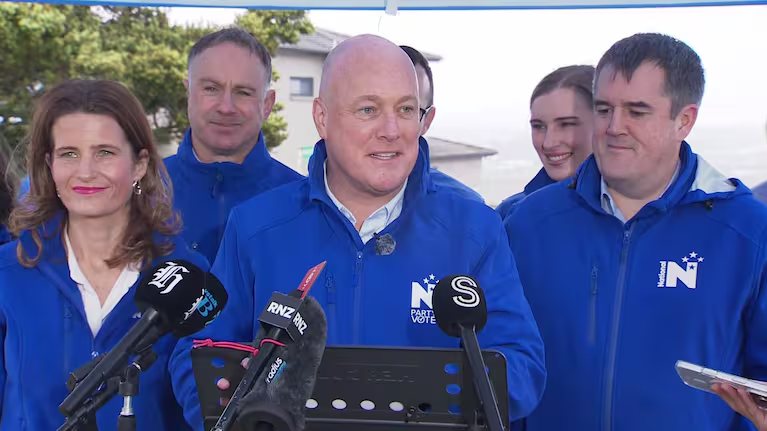
For now, he notes, New Zealand is under a caretaker government led by incumbent Prime Minister Christopher Luxon. It is unclear who will lead the next government or when coalition agreements will be signed.
Duncan identifies one hard deadline: parliament must assemble by January 14, whether or not a new government has been sworn in. Ideally, he says, matters would be resolved by then. The article does not say a government must be formed by that date.
He acknowledges there has been much talk about a "hung parliament" and even a fresh election, and says not all of it has been helpful. In fact, he argues, constitutional conventions give ample scope for negotiations to produce a governing arrangement supported by a majority in the House.
He also points to strong incentives for the parties to preserve stable government. Any party blamed for a return to the polls is likely to be punished by voters, he says, so it is in all their interests to make it work.
A temporary deadlock does not necessarily mean a fresh election, Duncan writes. The question of who governs can be settled in the debating chamber. His historical example is the 1928 election. The incumbent Reform government lost a no-confidence vote in the House. A minority United government, holding fewer than half the seats, then took office with the support of the Labour Party, the natural adversary of both Reform and United. Here "United" refers to the 1928 United Party government, not a united or joint government.
If an impasse occurred this summer, he says, Luxon's caretaker government would remain in office. Some ministers lost their seats in the election and their warrants expire by December 4. A cabinet reshuffle would therefore be likely.
Duncan then asks what happens if coalition talks stall and no new government can be sworn in by the time the new parliament assembles. At its first meeting, MPs would choose a speaker, who may come from any party. The Address in Reply debate is then the occasion for a confidence vote. That vote may show the incumbent coalition has lost the House's confidence and must resign. It may not.
He lists three possible pathways. In the first, the three parties of Luxon's caretaker government, assuming none has split away, hold a majority of seats and can defeat any no-confidence motion. They would continue to govern.
In the second, the caretaker parties do not hold a majority but still defeat the motion because a fourth party abstains or votes with them. The coalition may then continue to govern for the time being.
In the third, the caretaker parties lack a majority and lose the motion. The prime minister would tender his resignation to Governor-General Cindy Kiro.
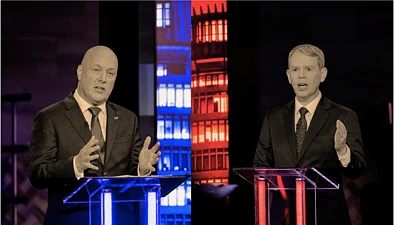
If the government resigns, Duncan says, the governor-general would expect a workable coalition to be found as soon as possible and to publish its agreements so a new administration can be sworn in. In effect, that is a change of government without another election. He says a new coalition could be led by Luxon or by Labour's Chris Hipkins, or, "for all we know, any other MP".
He then considers what happens if no alternative administration can command the House's confidence. If the governor-general is left without "responsible advisers", meaning government ministers, and no prime minister-designate appears to have the House's confidence, she may have to use her reserve powers. Those would allow her to dissolve parliament and sign the writ for a fresh election.
Duncan calls this the "nuclear option" and notes it has not been needed before in New Zealand. It is a generally accepted convention, he says, that the governor-general should not be put in a position that requires the use of reserve powers.
If an early dissolution and election were ever necessary, he argues, the political parties or a majority of MPs should call for it. That would make the decision transparently theirs and protect the governor-general's non-political constitutional role.
Politicians would then be accountable to voters for failing to form a stable government and would be judged at the ballot box. Duncan adds that this may only make it harder to form a new government.
"A majority can always be found, when the will is there," he writes. The governor-general must always have responsible advisers, and the people need stable government, even if it is not what most people would have wanted.
Duncan says forming a government can take a long time, and long periods of caretaker government have happened elsewhere. Belgium holds the world record. It is divided culturally and politically between Flemish-speaking Flanders and French-speaking Wallonia, and radical left- and right-wing parties have grown, complicating the formation of majority governments.
In 2010-11, Belgium went 589 days without forming a new federal government. In September 2020, a seven-party coalition agreement ended a record 652 days of caretaker government. Even so, Duncan notes, life went on and public administration continued.
He says it is still not best practice for a caretaker or minority government to battle from one confidence vote to the next and struggle to find the votes to pass a budget.
Far preferable, he writes, is for enough parties to sign coalition agreements that secure majority support for the full parliamentary term. If they cannot, public confidence declines, the parties argue more, and it only gets harder next time.
His conclusion is that if the political actors behave responsibly and make some compromises, they could have the job wrapped up by Christmas.
For HouGarden readers, including buyers, investors and tenants, the piece is mainly political background. Any effect would be indirect, through policy uncertainty while a government is being formed. The article makes no claims about house prices or interest rates.