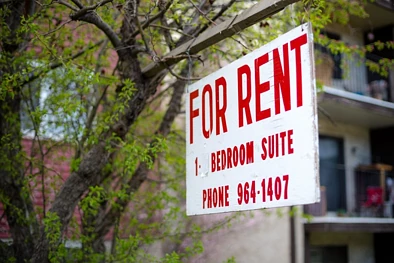
New Zealand rents tipped to rise up to 3% over the next year as supply tightens
HouGarden New Zealand, 26 October — Stats NZ data show rents on new tenancies rose 0.9% in the year to September 2025, reversing a 0.9% fall recorded in the previous year. That turnaround marks a clear inflection point: rents on new leases had been declining through 2024 and into 2025, and are now moving in the opposite direction.
ANZ senior economist Matthew Galt says the improvement in the broader economy is feeding through to the rental market, typically with a delay. 'Rents do tend to follow the economic cycle with a lag of about six to nine months. So with the improvement we've seen in the economy this year, I think that will continue to help pull rent inflation along at a low level,' Galt said. He expects new-tenancy rents to rise further. 'It's nearly 1% [rent rise for new tenancies] now. So, potentially somewhere in the 1% to 3% range in the next year.'
BNZ chief economist Mike Jones broadly agrees but cautions that increases are unlikely to be severe. 'We're also seeing pretty good rates of new building and consenting, so all of that suggests even as demand starts to lift, there'll be plenty of supply around to offset it,' Jones said. His central forecast is for new-tenancy rents to rise between 1.5% and 2.5% over the next year. Both sets of forecasts apply specifically to new tenancies, not to the entire renting population.
Supply in the rental market is tightening. According to Trade Me Property, new rental listings in September were down close to 5% compared with a year earlier, while the total number of properties listed for rent fell 7% over the same period.
At the same time, tenant interest is increasing sharply. Searches and listing views on the platform rose between 6% and 12% year on year, while the number of searches per individual listing was up 20%.
Trade Me Property spokesperson Casey Wylde said the data point to more competition among renters. 'Tenants are out searching in force, but they're competing for a smaller pool of properties,' Wylde said. 'Search activity has grown annually every month since the start of the year. If supply stays tight, that sustained demand will likely put upward pressure on rents coming into summer.'
Trade Me Property's Rental Price Index, which tracks the median asking rent on listings, shows the national median weekly rent has held between $610 and $625 per week for more than a year. The index has now gone four consecutive months without recording an annual decline.
Stats NZ recorded a 0.9% annual increase over the same broad period, but its figures measure rent changes on new tenancies only, while Trade Me Property's index tracks listing medians. The two measures use different data sources and methodologies and cannot be directly compared, though they are pointing in the same direction.
Ten of New Zealand's 14 regions recorded higher median weekly rents in September than a year earlier. Southland saw one of the largest gains, with its median weekly rent rising 4% to $500 per week. Marlborough also rose 4%, reaching $580 per week, while Northland and Waikato were each up 3%, both reaching $600 per week.
Not all regions recorded increases. Hawke's Bay saw median weekly rents fall 3% to $600, while Bay of Plenty was down 2% to $640 per week.
Auckland's median weekly rent held at $660 for the second consecutive month, after falling year on year for much of the past year. Wylde said that stability matters for the national picture. 'Auckland has been the main drag on national figures for much of the past 12 months, so seeing it stabilise is a milestone for the broader market,' she said.